



In this guide
- Which clock does the provider actually describe?
- How does a wallet withdrawal differ from a casino withdrawal?
- What steps does MiFinity document for requesting a withdrawal?
- Which destination is eligible for the money being returned?
- Why does a verified card need a separate check?
- What does On Hold KYC mean for this withdrawal?
- How should working days be read without inventing a deadline?
- Where should fees and currency be checked?
- What should be compared when a completed payment is missing?
- Should a second withdrawal be submitted to solve the first?
- What information helps support investigate the right stage?
- Where can an older wallet movement be found?
- Follow an illustrative transfer through its separate stages
- Which comparisons are useful before reading another method guide?
- Record both payment legs before discussing total time
- Separate the requested amount from the amount expected to arrive
- Read support replies for the event that starts the clock
- Keep destination corrections tied to the original request
- State what is confirmed and what remains open
- Preserve the scope when sharing an explanation
Which clock does the provider actually describe?
Check the withdrawal's recorded state before counting time. MiFinity describes a receiving window after completion of an eWallet withdrawal. A request still being reviewed has not reached that same event, so the words after completing are essential to understanding the guidance. Keep the actual status with the reference. Support can then identify whether your question concerns a review still in progress or a completed transfer whose entry has not appeared at its destination.
The FAQ separately describes an On Hold KYC withdrawal as a payments-team review that may take up to twenty-four hours. These statements describe different stages. Adding twenty-four hours to two working days would invent an end-to-end promise that the source does not make.
The figures here were read on 11 November 2026. They are published provider guidance, not measurements from a transfer performed by this publication. The calendar, destination and status of a real request still need to be established from its own records.
| Published information | Stage it describes | Source boundary |
|---|---|---|
| Allow 1–2 working days | Receipt after completing an eWallet withdrawal | Current MiFinity FAQ |
| Up to 24 hours | On Hold KYC payments-team review | Separate FAQ answer |
| Bank account or verified card | Documented withdrawal destinations | Provider withdrawal help |
| Fee calculated at approval | The particular request | No universal GBP fee stated here |
How does a wallet withdrawal differ from a casino withdrawal?
The operator may review a casino withdrawal before sending money to MiFinity. If that wallet credit is missing, the question concerns the earlier incoming payment; the wallet-to-bank receiving window cannot explain it. Even when both services use the word completed, each label refers to its own operation. Ask which record shows the money moving between them before using either status to decide where a delay has occurred.
Once the wallet credit is present, a later request to send money from MiFinity to a personal destination is another operation. Keep its confirmation and reference apart from the earlier casino request. Matching only the amount can confuse two movements with different review teams.
This guide focuses on the later withdrawal from the wallet. It does not establish which casinos accept MiFinity or confirm the conditions in an unnamed cashier, including a deposit minimum. First identify where the money is recorded now. That gives the timing question a starting point and prevents guidance for money leaving the wallet from being applied to an operator payment that has not yet reached it.
What steps does MiFinity document for requesting a withdrawal?
MiFinity's help describes opening the withdrawal operation in its account and choosing a destination offered for that account. These are provider instructions for the eWallet, rather than a walkthrough of a casino cashier. The procedure has not been repeated in a signed-in account for this publication. Read the current options and confirmation for the actual request alongside the documented steps, especially where the destination or status needs explaining.
Its documented options distinguish a personal bank account from a verified card. Follow the destination selection actually offered rather than assuming that any card saved elsewhere is eligible. The final approval screen is also the point to read the fee for the request being confirmed.
Retain the confirmation after submitting. A useful record connects the selected route, amount and currency with its reference. That gives support something precise to investigate if the status later differs from the receiving-account record; it is more useful than an isolated balance screenshot.
- Choose Withdraw in the MiFinity wallet.
- Choose the source wallet balance.
- Choose an eligible withdrawal destination displayed for that account.
- Enter the amount and review the displayed transaction information.
- Use Make Payment to submit, then retain the confirmation email.
Which destination is eligible for the money being returned?
A destination appearing in a help example does not establish that every customer can freely choose it. MiFinity's older withdrawal-policy article describes returning funds to the original funding instrument and refers to a primary card. Its date is retained because it is older operational guidance.
The newer walkthrough describes personal-bank and verified-card routes. Compare that wording with the older policy and the destinations actually offered for your balance. Listing those routes does not establish that the funding-origin condition has been removed. Nor does adding a destination show that it can receive every withdrawal. If the documents leave the position unclear, ask the provider which instructions apply to the particular request before treating a general help example as confirmation of eligibility.
If the required instrument is no longer usable, ask MiFinity through its secure support route before trying unrelated details. Describe the unavailable instrument without exposing its full number. The appropriate alternative needs to come from the provider's account-specific instructions.
Why does a verified card need a separate check?
The withdrawal help specifically describes a verified card. Being able to type a card number is a different matter from the provider having verified it for this operation. Do not replace that condition with a promise that any debit card or any previously used card will work.
Compare the masked instrument in the request with the destination saved on the confirmation. A replacement card, an expired card and a bank account have different identifiers, even where they relate to the same person. If the destination is unclear, ask which supported one should be used for the existing request. Submitting transfers repeatedly to find out would create more records without explaining the first selection.
No card verification procedure or document list is invented here. If the provider requests additional information, use its established signed-in channel and the instructions tied to that request. A public message thread is not a suitable place to upload evidence of card ownership.
What does On Hold KYC mean for this withdrawal?
The provider FAQ says its payments team reviews an On Hold KYC withdrawal and describes a review period of up to twenty-four hours. That is the source's explanation of the displayed hold state. It does not say that the receiving bank has already posted the payment.
Keep the status wording with the request reference and the time it was observed. If a message accompanies the hold, read whether it asks for an action or simply explains a review. Repeating the withdrawal does not answer which evidence the existing request requires.
Do not send a one-time banking code, a wallet password or a full card number to someone claiming that a transfer needs an external release fee. Confirm requests through the provider's established channel. This guide does not propose bypassing verification or changing ownership details to evade it.
How should working days be read without inventing a deadline?
The published receiving window uses working days. It should not be silently rewritten as a fixed number of elapsed hours. Record the completion date shown by MiFinity, then check the receiving institution's relevant working-day calendar instead of starting a stopwatch from the earlier casino request.
The FAQ wording reproduced here does not define a universal cut-off time for every destination. This article therefore supplies no invented same-day threshold or holiday exception. If timing is unclear, ask which completion event and receiving route the provider is applying to that reference.
A request begun before a weekend may show several calendar dates before receipt. Connect those dates to the actual changes in status: initiation, any review and completion are not the same event. A count of calendar days from the first request cannot, by itself, establish that the working-day receiving guidance was exceeded. Keep the relevant completion record and ask the provider which event and destination calendar apply if you cannot make that connection.
Where should fees and currency be checked?
MiFinity's withdrawal article says the fee is calculated when the withdrawal is approved. Read the amount displayed for the particular destination before confirming. A fee quoted for a different country, card route or provider service is not automatically the charge for this request.
There is no single flat GBP bank-withdrawal fee established here. The public fee page contains entries that depend on the route and a calculator, so a number taken out of context could mislead. Keep the country, operation and destination with any fee information you read. The useful figure for an actual request is the one shown for that request, interpreted according to the fields in its approval information.
Keep the currency beside both the requested amount and any expected receipt. If conversion is involved, retain the displayed conversion information with the confirmation. A balance difference should not be assigned to an exchange rate or a fee until the request record shows which applied.

What should be compared when a completed payment is missing?
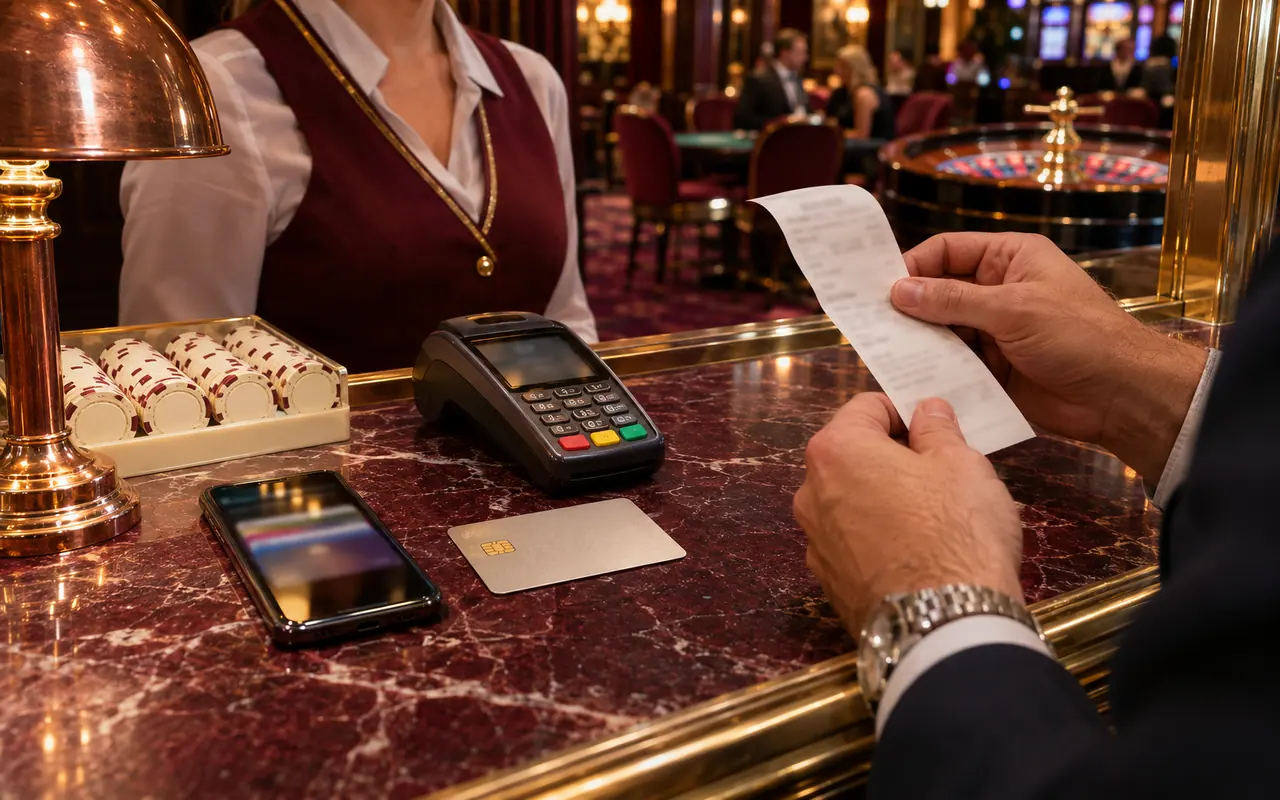
Start with the MiFinity withdrawal confirmation and its completed state, then compare the destination's own transaction record. Verify the masked destination and currency before treating a missing entry as a delay. A different instrument or statement period can make a legitimate record hard to locate.
If the applicable receiving window has passed, ask MiFinity about the specific completed transfer. Give the reference, amount, currency and completion date through its support channel. Ask whether it can identify a sending or receiving reference relevant to the selected bank or card route.
The bank or card issuer may need a different trace identifier from the wallet's customer-facing reference. Do not manufacture one or assume that every route produces the same identifier. Keep each institution's reply attached to the same transfer record rather than combining several requests.
| Record | Question it resolves |
|---|---|
| Wallet credit | Did the earlier incoming payment arrive? |
| Withdrawal confirmation | Which destination and amount were requested? |
| Completed state | Has the wallet operation reached its completion event? |
| Receiving-account entry | Has the destination posted the transfer? |
| Support reference | Which exact movement is being investigated? |
Should a second withdrawal be submitted to solve the first?
Another request creates another movement to reconcile. It does not explain a pending or completed first request. Establish the status and reference of the original before deciding what, if anything, to do next. A second submission should not be used as a diagnostic test for an unknown state.
If two confirmations already exist, record both separately. Compare their destination identifiers, currencies and statuses rather than treating them as one total. This keeps a possible duplicate request distinct from a single transfer that has not yet appeared in the receiving account.
Likewise, do not assume a missing receipt means the money has returned to the wallet. Check whether a return is actually recorded. The available balance alone cannot explain whether there was a fee, another transaction or a reversal associated with the withdrawal.
What information helps support investigate the right stage?
Name the operation at the start of a support enquiry. Explain whether the money reached MiFinity, whether a wallet withdrawal was requested and what status you can currently see. Those details tell support which part needs investigating. Without them, an answer about an earlier casino approval could be mistaken for an explanation of a later payment to a bank, even though the two services hold different records.
Include the date, amount, currency, wallet reference and masked destination where the provider's secure channel permits it. Quote the exact status message and explain which receiving entry is missing. Retain the original confirmation privately so that subsequent replies can be reconciled against it.
Ask one concrete question, such as whether the request is still under review or which completion date should start the receiving window. A written answer tied to the reference is easier to follow than a general statement that withdrawals are normally fast.
| Useful in a secure support request | Keep out of public posts |
|---|---|
| Reference and exact status | Password or one-time code |
| Amount,currency and completion date | Full card or bank details |
| Masked destination and missing record | Identity-document images |
| Previous support case reference | Unredacted account screenshots |
Where can an older wallet movement be found?
MiFinity's transaction-history help documents a ninety-day view after a sign-in using one authentication factor. It describes using a verification code and Transaction Search for broader retrieval. This is dated provider documentation, not a screen that this publication inspected inside a customer's account.
If the transfer being investigated is outside the visible statement period, check that boundary before concluding the record has disappeared. An email confirmation can also identify which period to inspect. Retain the original currency and destination details rather than searching only for a rounded total.
The verification code used for signing in belongs in the provider's own authentication flow. It is different from a support-case reference and should not be pasted into a message or public screenshot. A request for older history does not justify giving another person account access.
Follow an illustrative transfer through its separate stages
Follow an illustrative sequence without assuming a cash amount. First, a casino marks its payout as processed, but the wallet shows no credit. At this point the missing record is the incoming payment to MiFinity. The later wallet-to-bank receiving window does not explain that gap. The operator and provider need to identify the incoming event before any subsequent wallet withdrawal can be treated as part of the same sequence.
Later, the credit appears and a separate wallet withdrawal is requested. Its status shows On Hold KYC. The relevant explanation is now the provider's review-state guidance. It would be premature to describe the bank as late merely because the earlier casino request happened on a previous date.
Finally, the wallet operation is completed and the confirmation identifies the destination. Only then is the provider's post-completion receiving guidance the appropriate comparison. The example is a record-reading exercise, not an observed transfer, a recommended sequence of payments or a promise of a completion date.
Which comparisons are useful before reading another method guide?
Compare the same leg of the payment route. A casino-to-wallet approval estimate and a wallet-to-bank receiving estimate are not alternative measurements of one service. A smaller number on a different leg does not establish that the whole route will reach a bank sooner.
The same care applies when comparing a prepaid voucher with a wallet. Spending a voucher code, requesting a provider refund and withdrawing an existing eWallet balance are different operations. Their ownership conditions, destination records and supporting references should not be collapsed into one generic payout promise.
Use the related payment-security, account-record and withdrawal-window guides for those specific boundaries. None of them establishes acceptance by a particular casino. This publication's role is to make the records and source conditions understandable, rather than to select an account or process a transfer.
Record both payment legs before discussing total time
A private record can give the incoming casino payment and the later wallet withdrawal separate rows. Each row needs its own amount, currency, reference, observed status and destination. This keeps the operator's processing language attached to the first leg and the provider's post-completion guidance attached to the second. If a row is missing a confirmation, mark that absence explicitly. A complete-looking combined timeline should not be created by treating an earlier request as proof that a later movement exists.
An operator reference and a later MiFinity outgoing reference illustrate two distinct records. Equal amounts do not merge them into one. The wallet may have held an opening balance or recorded other movements, so reconcile the incoming credit before assuming the later withdrawal corresponds to it. This is a way to understand the account history, not a claim that individual units of money can be tracked inside a balance. Keep both references and the explanation connecting the relevant operations.
When asking support, name the relevant row first. If the wallet has no incoming credit, describe that missing entry. If a wallet withdrawal is completed but the receiving record is absent, describe the outgoing reference. This gives each organisation a bounded question. It also prevents an answer about the earlier casino payment from being interpreted as confirmation that a bank or card has received the later withdrawal.
Separate the requested amount from the amount expected to arrive
Keep the requested amount, displayed fee, displayed conversion information and destination currency in distinct fields. This avoids turning every difference into a guessed charge. The existing provider instructions say to read the fee associated with approval; they do not supply one universally applicable GBP figure for this article. A fee shown for a particular real request can be retained in that request's private record without being generalised to every reader or destination.
Imagine a request showing £70 beside a separately stated £2 charge. Before estimating receipt, ask whether £70 is defined before the charge, after it or in some other way. Subtracting £2 without that explanation could give the wrong result. These invented amounts illustrate a question about field meanings; they establish no MiFinity fee, minimum or actual screen layout. Keep what each field is called alongside its value so the provider can explain the record without guessing which total you used.
Where currencies differ, retain the original fields and the displayed basis rather than applying a later public exchange rate. A subsequent rate cannot establish what was used in the actual request. If the confirmation does not explain the difference, ask about the named transfer through the provider's genuine channel. Keep the question about that existing movement, without creating another withdrawal to compare the resulting numbers.
Read support replies for the event that starts the clock
A reply about timing should identify which event it uses. Requested, under review and completed are different observations in this guide. If a support message says to allow the published receiving window but does not identify the completion event, ask which recorded date applies to the named reference. This is more precise than restarting a count whenever a new email arrives. The date of a support reply is not automatically the date the underlying transfer completed.
A request may have an initiation date, a later hold notice and a completion confirmation. That illustrative sequence needs all three records. If support starts the receiving window from the completion confirmation, note that connection. If its answer seems to use another event, ask for clarification. Adding the separate published periods would invent a maximum overall duration. Each source statement describes its own stage, while the real request still needs an explanation tied to its reference and actual changes in status.
The same care applies when describing elapsed time publicly. Say which event and calendar you used, and omit identifying details. A statement such as several days since the casino request cannot, on its own, evaluate the later wallet-to-destination receiving guidance. Naming the stage makes the observation understandable while preserving the distinction between a personal timeline and a provider promise.
Keep destination corrections tied to the original request
If a destination becomes unavailable, retain the masked identifier originally selected and explain the problem through MiFinity's secure route. Ask what administrative action is supported for the existing request. Do not assume that editing an account detail automatically redirects money already requested, or that an unrelated destination can replace it. This article supplies no such policy. The provider needs to explain what is possible for the actual state and instrument.
For a replaced-card question, identify the old masked card on the confirmation and ask how the existing request should be handled. This example needs no public disclosure of complete old and new card numbers. If evidence is required, first establish its purpose and secure submission route. Save the answer beside the original confirmation. You can then read later status messages against the administrative instruction that actually applies, without assuming that updating a destination automatically redirected an earlier request.
Avoid repeated requests while a correction is unexplained. A second withdrawal may select another instrument, but it does not settle what happened to the first. If more than one request already exists, give each its own reference and status. This helps distinguish a destination issue from a duplicate-looking record, and keeps the support conversation focused on money already requested rather than a proposed workaround.
State what is confirmed and what remains open
A closing note should distinguish a located wallet credit, an explained review state, a completed outgoing request and a matching destination receipt. These are separate findings. If only some are established, leave the others open. A provider reply that explains a hold does not automatically demonstrate receipt at the bank. A bank receipt does not explain the duration of an earlier casino review. Keeping the conclusion narrow makes it useful when another organisation asks what has already been checked.
Retain the dated source wording alongside the private confirmation without presenting either as an account test by this publication. The public article explains published stages and source boundaries; the confirmation identifies your particular request. If you later need a further enquiry, begin with the last confirmed event and the next missing record. That is enough to direct the question without supplying a guessed deadline, an invented fee or another transfer intended to prove the route works.
Preserve the scope when sharing an explanation
If you summarise the result for someone helping you, include the stage rather than quoting a time figure alone. A note about a completed wallet withdrawal should say that it concerns the wallet's outgoing operation. A note about a missing casino credit should identify that earlier gap. This avoids a well-intentioned helper comparing the wrong clock with the wrong event. Share the minimum relevant evidence and keep authentication codes, complete instrument details and unrelated transactions private. Clear scope makes the explanation easier to review without turning private account material into a public troubleshooting thread.
Questions and answers
How long does MiFinity transfer take?
The current provider FAQ asks users to allow 1–2 working days for receipt after completing an eWallet withdrawal. That describes the wallet's outgoing receiving window, so it is not an estimate for the whole casino-to-bank route.
Can you withdraw from MiFinity?
The provider's help describes withdrawal to a personal bank account or verified card. Available destinations and funding-origin conditions need to be read for the actual request.
Can I transfer money from MiFinity to a bank account?
The official walkthrough documents a personal-bank withdrawal route. It does not confirm that an arbitrary destination or a particular account's balance is eligible.
My withdrawal says On Hold KYC. What does this mean?
MiFinity's current FAQ describes a payments-team review that may take up to 24 hours. This is separate from receipt after completion. Keep the status with its reference and follow any attached request through the provider's secure channel.
How much does MiFinity charge to withdraw?
The withdrawal help says the fee is calculated at approval. Read the fee shown for the selected destination; this article does not assert one flat GBP charge for every route.
Sources and scope
Reviewed 11 November 2026. GB means England, Scotland and Wales. Provider examples do not establish availability on every account.
- How to Withdraw Funds from Your MiFinity eWallet; source updated 2026-03-26 12:23, read11November2026support.mifinity.com
- MiFinity homepage FAQ; source updated undated, read11November2026mifinity.com
- MiFinity Fees; source updated undated, read11November2026mifinity.com
- What is the withdrawal policy?; source updated 2021-10-11 09:19, read11November2026support.mifinity.com
- I am unable to view all my transactions.; source updated 2021-10-11 09:19, read11November2026support.mifinity.com
- MiFinity Security Center; source updated undated, read11November2026mifinity.com
- How do I make a payment to a Merchant?; source updated 2021-10-11 09:10, read11November2026support.mifinity.com
- Submit a request; source updated undated, read11November2026support.mifinity.com